
Why Chiropractic Is the Missing Piece in Pediatric Therapy Intensives
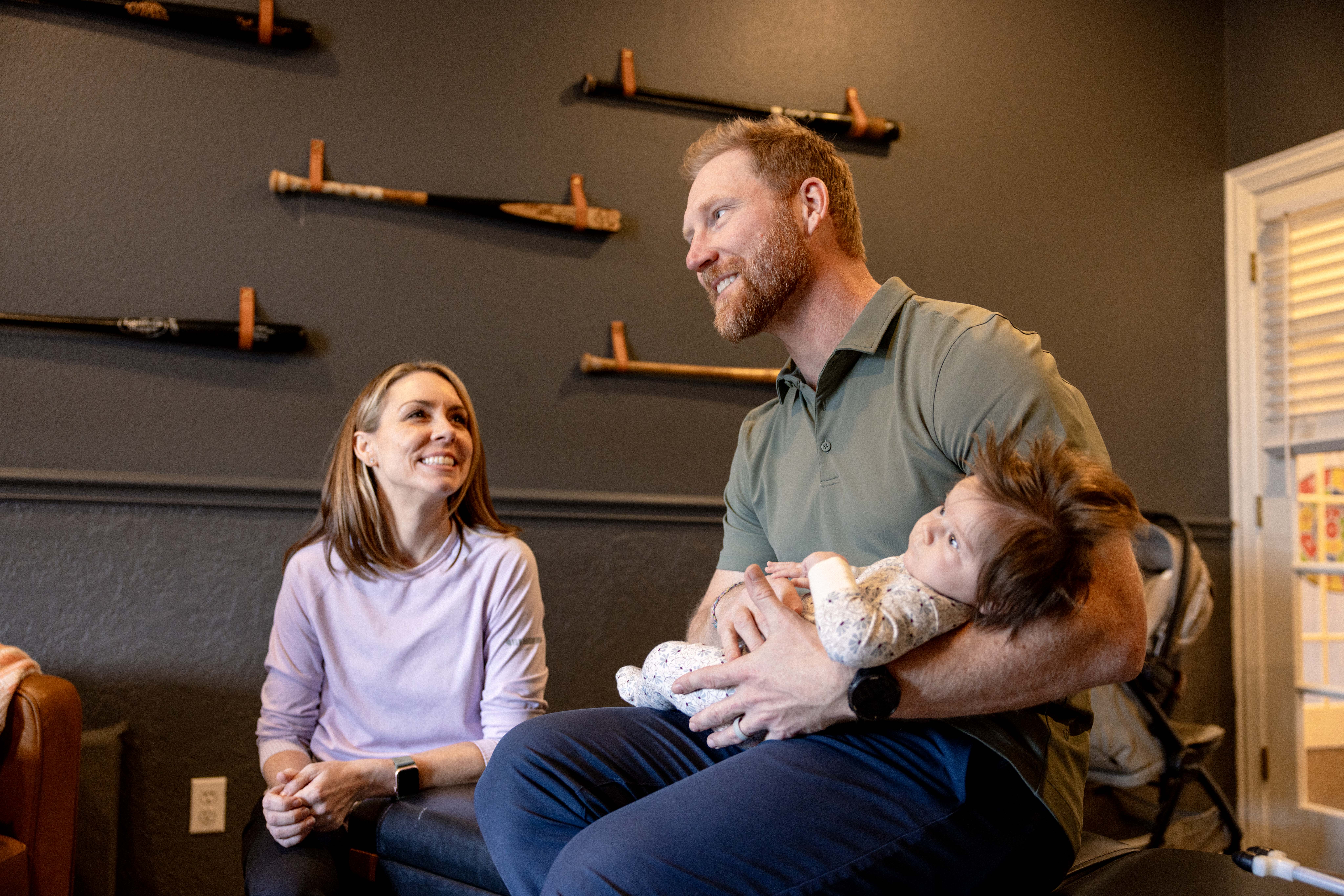
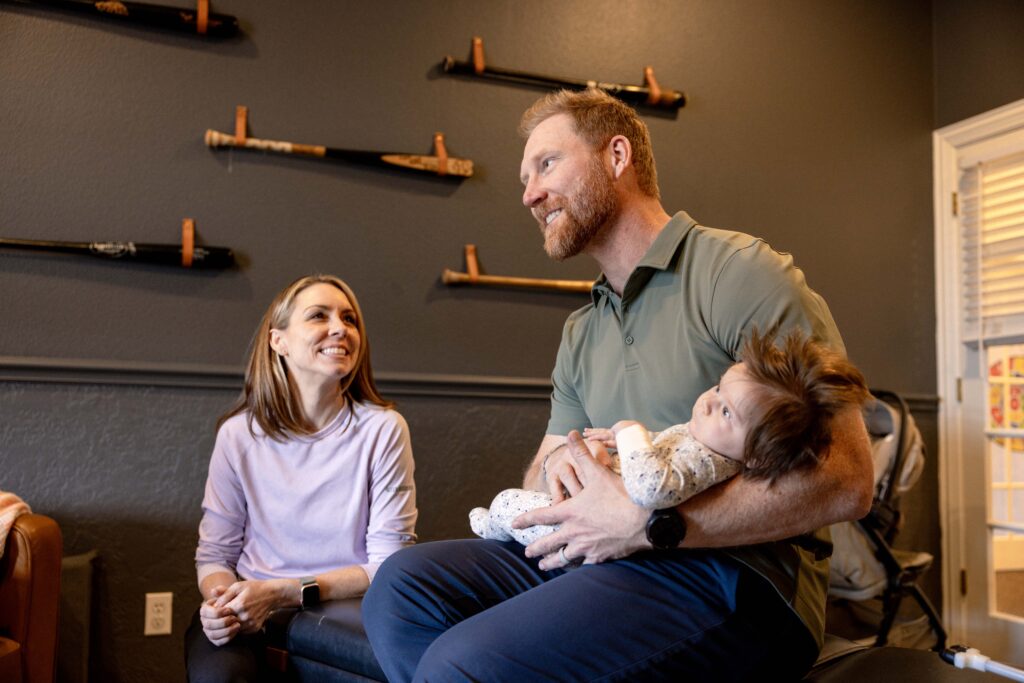
Your child’s therapy intensive starts in a few weeks. Two weeks long. Three hours a day. Focused, concentrated physical therapy designed to create breakthroughs.
But here’s a question most families never think to ask: Is your child’s body actually ready to receive that therapy?
At KinActive Kids, we’ve completed over 700 intensive therapy programs for families across 45 states and 25 countries. One of the biggest lessons we’ve learned is this: the most important work often happens before the first PT exercise even begins.
That work is chiropractic. And it might be the piece your child’s pediatric therapy intensive is missing.
The Nervous System Runs the Show
Before a child can roll, crawl, sit, or walk, their nervous system has to coordinate every piece of the movement. The brain sends signals to the muscles, telling them when to fire, how hard, and in what sequence. That communication has to be clear.
When there’s interference in that communication, even subtle interference, the body compensates. It finds workarounds. It develops patterns that technically accomplish a task but do it inefficiently, asymmetrically, or with unnecessary effort.
This is the foundation that most therapy intensives skip over entirely.
The Hidden Barriers to Progress
Here’s what we see every week in our clinic.
A child arrives for their KinActive Kamp. They’ve been in traditional therapy for months, sometimes years. They’ve made progress, but it’s been slow. Their therapists are skilled. The exercises are appropriate. The frequency is there. But something is holding things back.
When our chiropractic team evaluates that child, we almost always find structural restrictions forcing the body to compensate. In real terms, that looks like:
- Tightness at the top of the neck (upper cervical spine) that limits head control, which changes how your child uses their eyes and organizes their body to move
- Stiffness through the mid back (thoracic spine) that blocks rotation, so instead of a clean cross crawl you see bunny hopping or one sided dragging
- Restricted hips and pelvis that shrink range of motion, making stable independent sitting nearly impossible
- Tension in the low back and pelvis (sacrum) that disrupts weight shifting, turning what should be reciprocal steps into a wide, stiff gait
You can’t stretch these away. You can’t strengthen around them. They’re structural barriers sitting upstream of the movement problem everyone is trying to fix.
When those restrictions are present during an intensive, you’re asking a child to build new movement patterns on top of a system that can’t fully support them. They’ll work harder, fatigue faster, and progress will hit a ceiling.
How Chiropractic Fits Into the KinActive Intensive Model
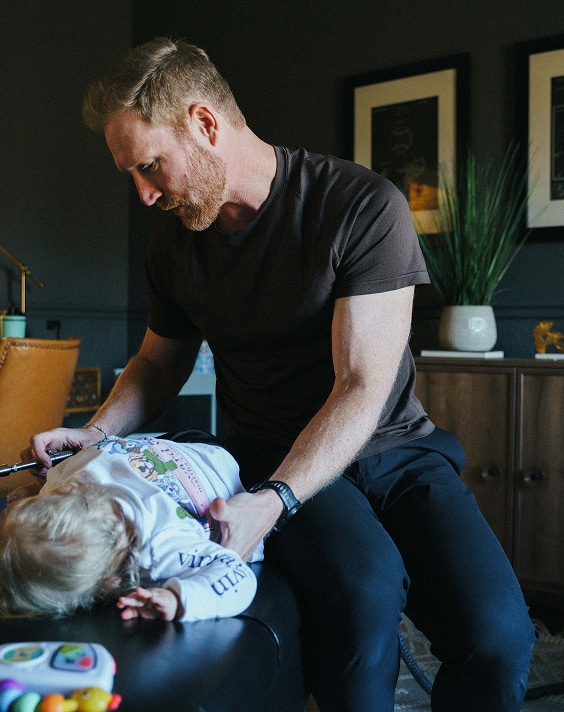
At KinActive, chiropractic isn’t a separate add on down the hall. It’s woven into every day of your child’s Kamp.
Before therapy each day, our chiropractic team evaluates your child. Where are the restrictions today? What’s tight? What’s not firing? What changed from yesterday?
We take into account what the PT team needs. This is what makes our model different. Our chiropractors and physical therapists communicate constantly. If the PT is working on crawling and the child can’t rotate through the thoracic spine, our chiropractor addresses that restriction so the PT session that follows can actually access the movement pattern they’re trying to build.
Throughout the intensive, we monitor how the body is responding. Restrictions shift. New ones emerge as the body starts moving in ways it hasn’t before. Our chiropractic care evolves daily along with what the PT team is seeing in real time.
This level of coordination doesn’t happen when chiropractic and physical therapy are separate appointments at separate clinics. It happens when two disciplines work together with a shared understanding of the child’s body and a unified goal.
What Happens When You Remove the Barriers First
When we identify and remove restrictions through targeted chiropractic adjustments before and throughout an intensive, something shifts. The nervous system communicates more clearly. Muscles that weren’t firing start to engage. Range of motion that wasn’t available opens up. And physical therapy exercises that were producing slow, grinding progress start producing breakthroughs.
We see it constantly:
- A child who has been working on sitting for months achieves independent sitting within days. Not from more sitting practice, but because we released the tightness in the mid back (thoracic spine) and hips that was blocking the postural control they needed to stay upright.
- A child stuck at a standing plateau begins taking steps in their first week. Not from harder gait drills, but because we restored movement in the hips, pelvis, and low back (lumbar spine) so their body could shift weight from one leg to the other the way walking actually requires.
- A child working on crawling moves from a lopsided pattern to a coordinated cross crawl (opposite arm and opposite leg moving together), because we addressed the spinal restrictions that were blocking the rotation their body needed.
This isn’t magic. It’s biomechanics. When the body is free to move the way it was designed to move, therapy works the way it was designed to work.
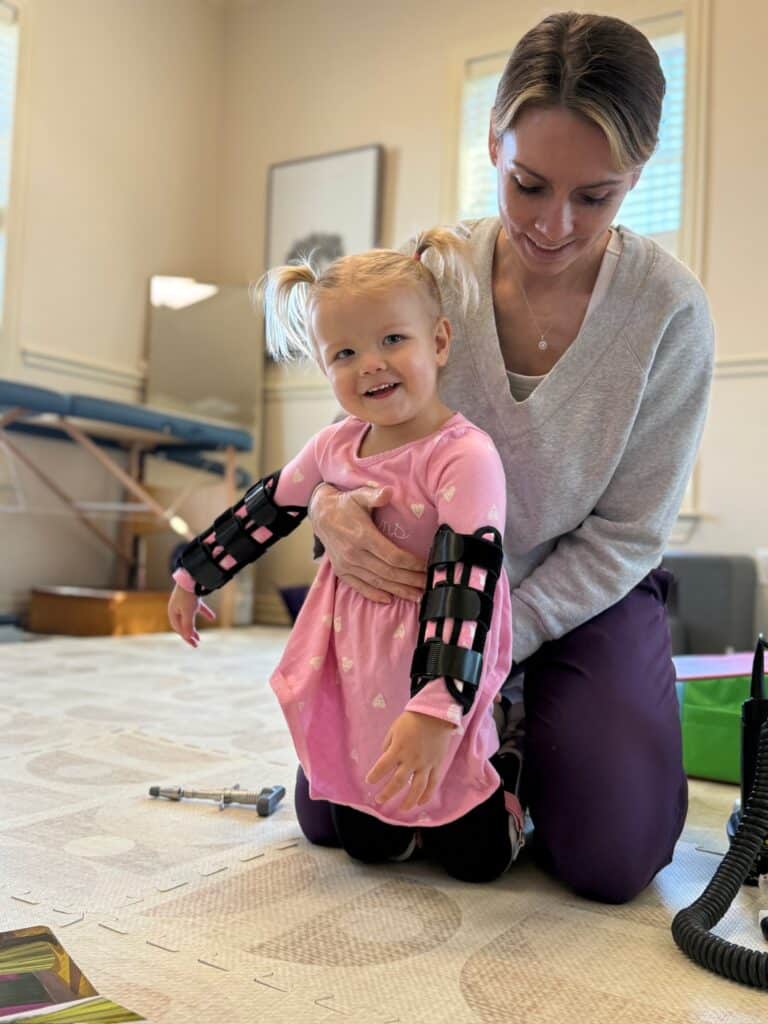
The Problem With “More Therapy” Alone
The intensive therapy world is growing, and that’s a good thing. Intensity matters. Frequency matters. The research is clear on that.
But here’s the blind spot: more repetitions of a compensated pattern don’t fix the compensation.
If a child has a restriction preventing proper hip extension and you spend two weeks doing gait training, you’ll get adaptation and effort. You might see some progress. But you won’t get the clean, functional movement pattern that would have been possible if the restriction had been addressed first.
Think of it like a kinked garden hose. Turn the pressure up and you’ll get more water, but you’ll never get full flow until you remove the kink. Increasing therapy intensity without addressing restrictions is like turning up the pressure on a kinked hose.
Most pediatric intensives are run by physical therapists or occupational therapists. Their training is excellent and their techniques are evidence based. But they weren’t trained to assess and treat spinal and skeletal restrictions the way a chiropractor is. That’s not a limitation of their skill. It’s a different discipline with a different lens.
When Dr. Emily Heisey, DPT, founded KinActive Kids, she recognized this gap from the PT side. She saw children hitting walls in therapy that didn’t make sense based on their strength, cognition, or effort. Something else was in the way. When we began working together and integrating chiropractic into the intensive model, the results spoke for themselves.
We didn’t just add a service. We changed the conversation.
Instead of asking “How do we get this child stronger?” we started asking “What’s preventing this child’s body from doing what it’s capable of?”
The Difference You Can See
Parents tell us all the time that they’ve done intensives before. Good ones, with skilled therapists and real effort. And they saw progress.
Then they come to KinActive, where chiropractic is built into the model, and they see something different. Not just more progress. Different progress. Movement that looks cleaner. Patterns that carry over at home. Gains that stick instead of fading within weeks of leaving.
That’s not because we work harder than other programs. It’s because we address the whole picture: the nervous system, structural alignment, and biomechanical restrictions. Then we build movement on top of a body that’s ready to learn.
Frequently Asked Questions
Is chiropractic care safe for children?
Yes. Pediatric chiropractic uses gentle, low force techniques specifically adapted for a child’s developing spine and nervous system.
How is pediatric chiropractic different from adult chiropractic?
Pediatric adjustments use significantly less force, often no more than the pressure you’d use to check a ripe tomato. The focus is on restoring mobility and nervous system communication, not the dramatic manipulations adults often associate with chiropractic care.
Does my child need chiropractic if they’re already in physical therapy?
PT and chiropractic address different layers of the same system. PT builds strength, coordination, and motor patterns. Chiropractic addresses the structural and neurological restrictions that can prevent those patterns from developing cleanly. Together, they’re more effective than either one alone.
What ages do you work with at KinActive Kids?
We work with infants through adolescents. However, most of our intensive families are between 6 months and 8 years. Many children we see have atypical development, motor delays, or diagnosed neurological conditions.
Is Your Child’s Intensive Missing This Piece?
If your child has been in therapy and progress has felt slower than expected, or if you’re planning an intensive and want to make sure every session counts, it’s worth asking whether structural restrictions are part of the equation.
Not every child needs the same level of chiropractic intervention. But every child deserves to have someone look at the full picture before spending weeks building patterns on top of barriers that could have been removed.
Over 700 families have experienced what’s possible when chiropractic and physical therapy work together with daily intensity and a method built on the true foundations of development.
Your child’s breakthrough might not require more therapy. It might require removing what’s been in the way all along.
Need Additional Support?
At KinActive, we understand that every baby develops at their own pace, but we’re here to support you through every stage of your little one’s journey. If you have concerns about your baby’s motor development or are seeking guidance on gross motor milestones, we can help in a few ways.
- Take a masterclass. Best for parents needing professional guidance from the comfort of their own home.
- Book a Kamp. Best for parents with children experiencing atypical development.
- Book a virtual consultation with our clinic.