
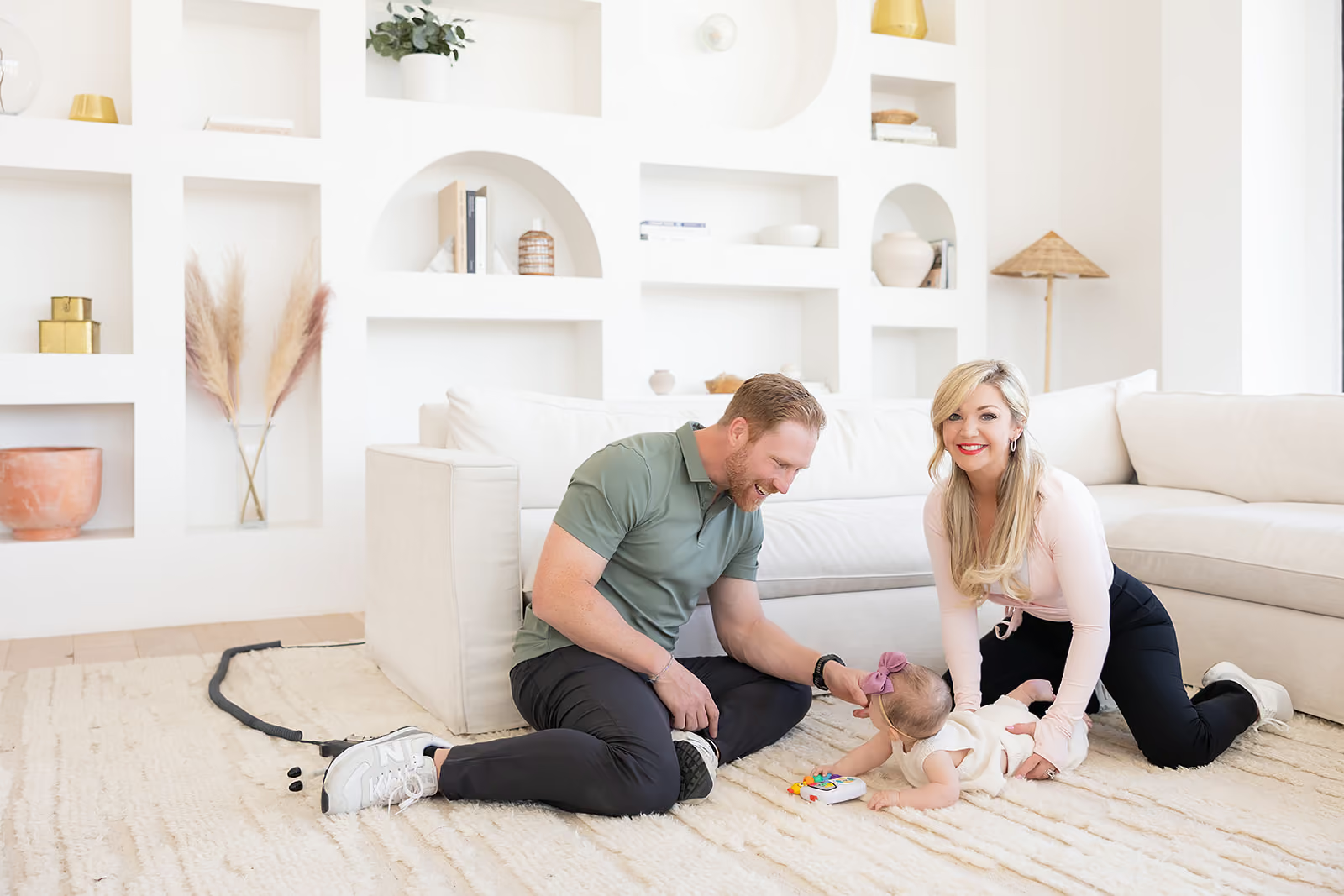
Groundwork
Head control, tummy time, rolling. Groundwork turns the guesswork of the newborn stage into twenty minutes a day of play that actually builds something.


You were handed a baby and a vague instruction to "do tummy time."
No one tells you how long, or what to do when they scream after ninety seconds, or what you're even supposed to be looking for.
Then it's rolling and yours goes one direction beautifully and flatly refuses the other.
Then it's sitting, and every baby you know is upright while yours folds sideways the second you let go.
Each time the advice is the same shrug, “every baby is different” or “they'll do it when they're ready”.
But here's what nobody connects for you… tummy time and rolling aren't two separate problems.
The weight-bearing through the forearms you're supposed to see in tummy time is what makes the roll possible in the first place. Skip it early and you don't get a tummy time problem. You get a rolling problem two months later, and no obvious reason why.
The answer is purposeful play, not simply “more play”
This course won’t give you a longer to-do list. It's the same twenty minutes you already spend on the floor, aimed at something specific.
You'll learn the four play positions – tummy, back, sidelying and vertical – and what each one is actually building, so tummy time stops being the whole strategy and stops being a fight.
You'll learn rolling as two four-step frameworks, the 4 T's for belly to back and the 4 R's for back to belly, instead of something you wait for. So when your baby stalls in one direction, you know which of the four steps is missing.
You'll learn the repositioning habits that lower the risk of flat spots and torticollis, built into the feeding, carrying and diaper changes you already do.
And underneath all of it, you'll learn to read what your baby is telling you: whether to keep going, or change something.
By six months you won't have done tummy time. You'll have built head control, then a roll in both directions, in that order and on purpose.
What's inside
1. Gross Motor Foundations
- Foundational milestones4 lessons
Birth to 4 Weeks
4 to 8 Weeks
3 Months, plus Tummy Time Tips
4 Months, plus Introduction to Prop Sitting
- 0-12 Weeks9 lessons
Setting the Foundation: Play Positions for Birth–10 Weeks
Tummy Time Activity 1: Proper Positioning & Mirror Play
Tummy Time Activity 2: Over Parent's Leg
Introduction to Back Play & Positioning Tips
Sidelying Play Activity 1: Over Parent's Leg
Sidelying Play Activity 2: Mirror Play
Vertical Play Activity 1, plus Positioning Tips
Vertical Play Activity 2: Facing Outward
Vertical Play Activity 3: Exercise Ball
- 12 Weeks & Up7 lessons
Tummy Time Activity 1: Positioning & Baby Planks
Tummy Time Activity 2: Exercise Ball
Vertical Play Activity 1: Exercise Ball
Vertical Play Activity 2: In Parent's Lap
Sidelying Play
Back Play
Prop Sitting for 4 Months & Up
- Torticollis & Plagiocephaly Prevention6 lessons
Introduction to Plagiocephaly and Torticollis
Repositioning: Baby Wearing
Repositioning: Breastfeeding Posture & Diaper Change Positioning
Repositioning: Carrying
Repositioning: Rooting Reflex
Repositioning: Sidelying Play
2. Rolling
- Rolling Belly to Back – the 4 T's10 lessons
Overview of the 4 T's and Introduction to "Tuck"
Tuck Activity 1: Tummy Time Over Boppy or Pillow
Trunk Strength Activity 1: Baby Plank Over a Towel Roll
Trunk Strength Activity 2: Modified Hands and Knees on Couch Cushion
Transfer Activity 1: On an Exercise Ball
Transfer Activity 2: Sidelying on Parent's Leg
Transfer Activity 2: Modification
Transfer Activity 3: Sidelying Over a Towel
Turn Activity 1: Tracking an Object with Towel Roll
Turn Activity 2: Tracking an Object on a Wedge or Incline
- Rolling Back to Belly – the 4 R's7 lessons
Introduction to "Rear Up" and the 4 R's of Rolling Back to Belly
Rear Up Activity 1: Back Play with Beads and Towel Assist
Reach Activity 1: Sidelying to Crossbody Reach
Rock Activity 1: In Parent's Lap
Rock Activity 1, with Modification
Rock Activity 2: V-Ups
Raise Up Activity 1: Reaching Across & Overhead
What you'll walk away with
Tummy time that works. Shoulders higher than hips, the right surface, the right duration — the positioning details that turn a scream into a session.
A roll in both directions. When your baby rolls one way and refuses the other, you'll know which of the four steps is missing and which activity builds it.
Prevention, instead of panic. The repositioning strategies that reduce flat-spot and torticollis risk, built into things you already do twenty times a day.
The ability to spot a setback. Not weight-bearing through the forearms? Trunk strength lagging? You'll recognize it and know what to do about it.
Who it's for
Expecting parents, new parents, and caregivers of babies from birth to around six months. It's built for typically developing babies whose parents want to be active participants rather than spectators.
Who it isn't for: this isn't a substitute for care. If your child has a diagnosed delay or you have active concerns, this supports professional treatment, it doesn't replace it.