
Pediatric vs. Adult Chiropractic Adjustments: What Every Parent Should Know


If you’ve ever had a chiropractic adjustment yourself, the kind where you hear that satisfying crack and feel your spine decompress, you might have a hard time picturing that happening to your baby or toddler. And honestly? That concern makes perfect sense. The idea of someone “adjusting” your tiny child the way an adult gets adjusted sounds intense.
But here’s what most parents don’t realize: a pediatric chiropractic adjustment looks and feels almost nothing like an adult one. The techniques, the pressure, the goals, they’re all fundamentally different. And understanding that difference is often what helps parents move from nervous to confident about chiropractic care for their child.
What Does an Adult Chiropractic Adjustment Look Like?
If you’ve been to a chiropractor as an adult, you probably know the routine. You lie on a table. The chiropractor locates the area of restriction, positions you, and delivers a quick, controlled thrust. You might hear a pop or crack, that’s gas releasing from the joint as it gains function back. The force can feel substantial, and for good reason: adult bones are fully formed, muscles and ligaments have been holding compensatory patterns for years (sometimes decades), and it takes meaningful force to restore motion to a joint that’s been restricted.
Adult adjustments often address:
• Chronic back or neck pain
• Headaches and migraines
• Joint stiffness from sitting, stress, or repetitive movements
• Postural imbalances built up over years
• Recovery from injuries or surgeries
The adjustments work, and they’re safe when performed by a trained professional. But they are designed for adult bodies: fully developed skeletal structures with years of accumulated tension.
Now Forget All of That: What a Pediatric Adjustment Actually Looks Like
A pediatric chiropractic adjustment is a completely different experience. If you walked into a room during a baby’s adjustment, you might not even realize it was happening. There’s no cracking. No twisting. No forceful thrusting.
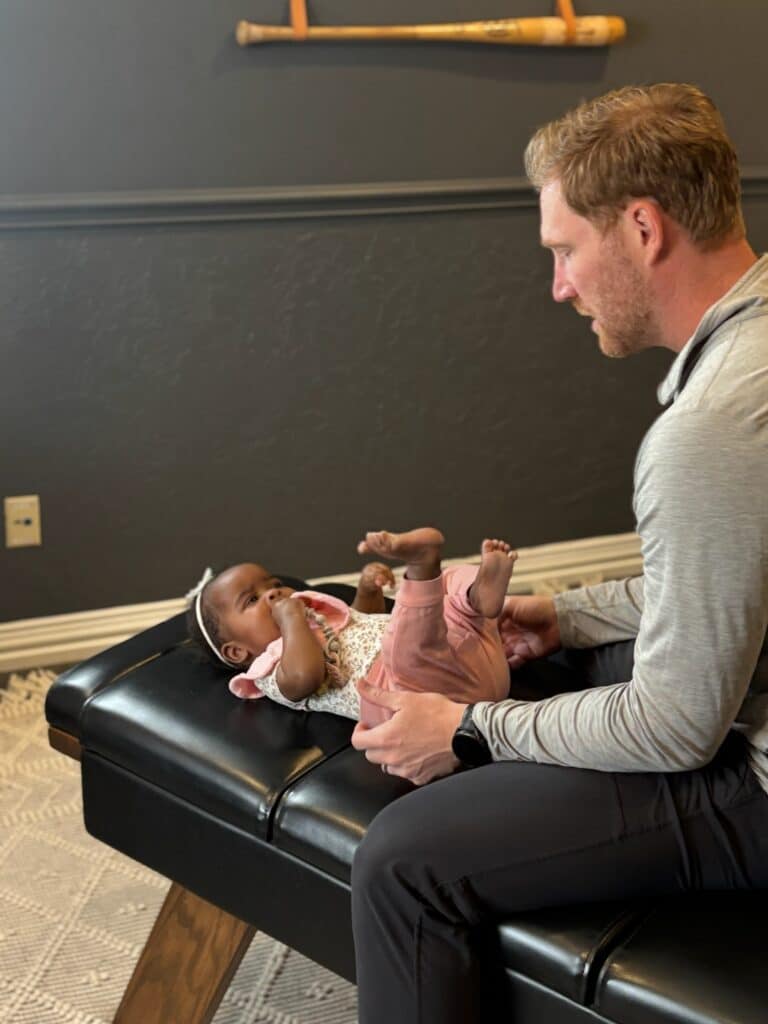
For infants and young children, the adjustment involves gentle, sustained fingertip pressure, about the same amount you’d use to check whether an avocado is ripe, or the pressure you’d comfortably apply to your own closed eyelid. That’s it.
Your child might be lying in your arms, nursing, or even sleeping. The chiropractor uses their fingertips to locate areas of tension or restriction along the spine and cranium, then applies light, specific pressure to help the body release that tension. Many babies relax, yawn, or fall asleep during their adjustment.
For toddlers and older children, adjustments may involve slightly more pressure, but still far less than what an adult receives. The chiropractor may use gentle mobilization techniques, play-based positioning, or small handheld instruments, all designed to be comfortable and safe for a growing body.
Why the Difference? Because Kids Aren’t Small Adults
The reason pediatric adjustments are so different comes down to biology. Children’s bodies are not just smaller versions of adult bodies, they are structurally and neurologically distinct in ways that demand a completely different approach.
• Bones are still developing. In infants and young children, bones are softer, more cartilaginous, and have growth plates that are still active. They don’t need, and shouldn’t receive, the same force as fully formed adult bones.
• Joints are more flexible. Children have naturally greater joint laxity (looseness). Where an adult’s stiff, restricted joint needs a firm push to restore motion, a child’s joints respond to much lighter input.
• The nervous system is rapidly developing. In the first years of life, the brain and nervous system are forming connections at an extraordinary rate. Gentle chiropractic input can support that development by reducing interference and optimizing communication between the brain and body.
• Restrictions are newer. An adult who’s had poor posture for 20 years has deeply ingrained patterns. A baby or toddler may have tension from the birth process, positioning in utero, or early movement patterns, but those restrictions haven’t had years to set in, so they respond to much less force.
The bottom line: less is more with pediatric adjustments, and a skilled pediatric chiropractor knows exactly how to calibrate their touch for a developing body.
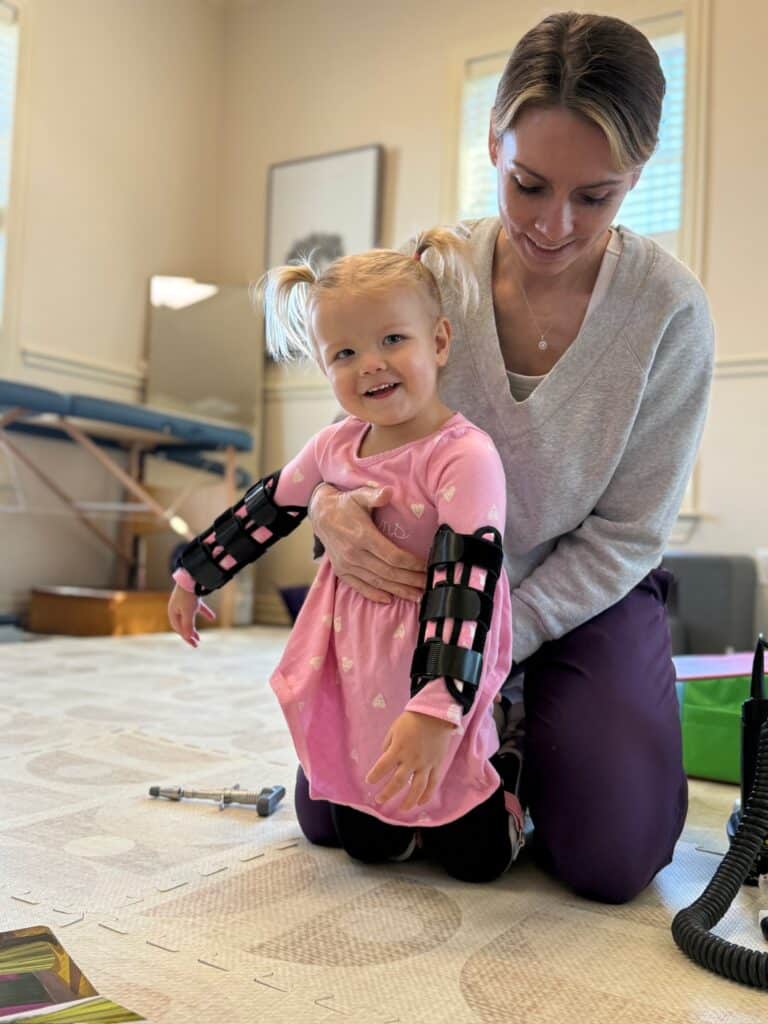
What Pediatric Chiropractic Care Can Help With
Parents often wonder: why would a baby or young child even need chiropractic care? The answer is that the earliest stages of life involve tremendous physical stress on the body, and gentle chiropractic care can help the nervous system and musculoskeletal system function at their best during critical developmental windows.
Common reasons families bring their children to a pediatric chiropractor:
• Torticollis (head tilt or preference to turn one direction)
• Difficulty with latching, feeding, or nursing
• Tongue and lip ties (before and/or after frenectomy)
• Colic, reflux, or excessive fussiness
• Developmental delays in rolling, sitting, crawling, or walking
• Low muscle tone (hypotonia) or high muscle tone (hypertonia)
• Asymmetrical movement patterns or flat spots on the head
• General wellness and nervous system support
For children with diagnoses like cerebral palsy, Down syndrome, Angelman syndrome, or other neurological conditions, pediatric chiropractic care can complement physical therapy by optimizing alignment and nervous system function, helping the body respond better to the hard work it’s doing in therapy.
How KinActive Approaches Pediatric Chiropractic Care
At KinActive, our chiropractors specializes in pediatric chiropractic care, and they understand the anxiety parents feel the first time they bring their child in. That’s why every visit starts with a thorough explanation of exactly what will happen, why it’s being done, and what tools may be used. You’ll never be surprised, and you’ll always have the chance to ask questions before anything happens.
Our pediatric chiropractic approach includes:
• A detailed assessment of how your child’s musculoskeletal and nervous system are functioning, looking at posture, symmetry, range of motion, muscle tone, and spinal alignment
• Gentle, age-appropriate adjustments using fingertip pressure or specialized instruments
• A customized plan that evolves as your child grows and develops
What makes KinActive unique is that we don’t always do chiropractic care in isolation. When recommended, we combine it with pediatric physical therapy, creating an integrated approach where chiropractic adjustments remove restrictions to movement and PT builds functional strength and skills. For families in our intensive, KinActive Kamp, programs, this combination is especially powerful, the chiropractic work supports and enhances everything happening in therapy sessions.
And we treat the whole family! Adults benefit from chiropractic care too, especially parents whose bodies are under constant physical strain from carrying, lifting, feeding, and the general stress of caring for a child. We offer adult adjustments alongside your child’s care, because you can’t pour from an empty cup.
The Quick Comparison: Adult vs. Pediatric Adjustments
Adult Adjustments:
• Higher force, quick controlled thrusts
• Often produce an audible “pop” or “crack”
• Address years of accumulated tension and restriction
• Bones are fully formed and dense
• Focus on pain relief, mobility, and correcting chronic patterns
Pediatric Adjustments:
• Very light fingertip pressure, no more than you’d use to test a ripe avocado
• No cracking, popping, or twisting
• Address newer restrictions from birth, positioning, or early development
• Bones are softer, joints are more flexible
• Focus on nervous system optimization, developmental support, and reducing tension
If you’ve been curious about chiropractic care for your child but felt unsure because of what you’ve experienced as an adult, we hope this helps. It’s genuinely not the same thing. Pediatric adjustments are gentle, safe, and designed specifically for your child’s growing body and developing nervous system.
At KinActive, we welcome your questions, all of them. We want you to feel informed, comfortable, and confident before we ever lay a finger on your child. Whether your little one is dealing with feeding challenges, developmental delays, or you just want to support their overall wellness, we’re here to help.
Reach out to schedule a consultation. Come see for yourself how gentle it really is. Your child, and your peace of mind, are worth it.
Need Additional Support?
At KinActive, we understand that every baby develops at their own pace, but we’re here to support you through every stage of your little one’s journey. If you have concerns about your baby’s motor development or are seeking guidance on encouraging more traditional crawling, we can help in a few ways.
- Take a masterclass. Best for parents needing professional guidance from the comfort of their own home.
- Book a Kamp. Best for parents with children experiencing atypical development.
- Book a virtual consultation with our clinic.
We offer comprehensive services designed to support your baby’s physical development, from structured therapy sessions to hands-on advice that you can implement at home. Contact us today to schedule a consultation and help your baby reach their full potential. And don’t forget to follow us on social media for more tips and information on your baby’s development.