
Understanding Infant Motor Development: The Hidden Clues Before Baby Milestone Delays
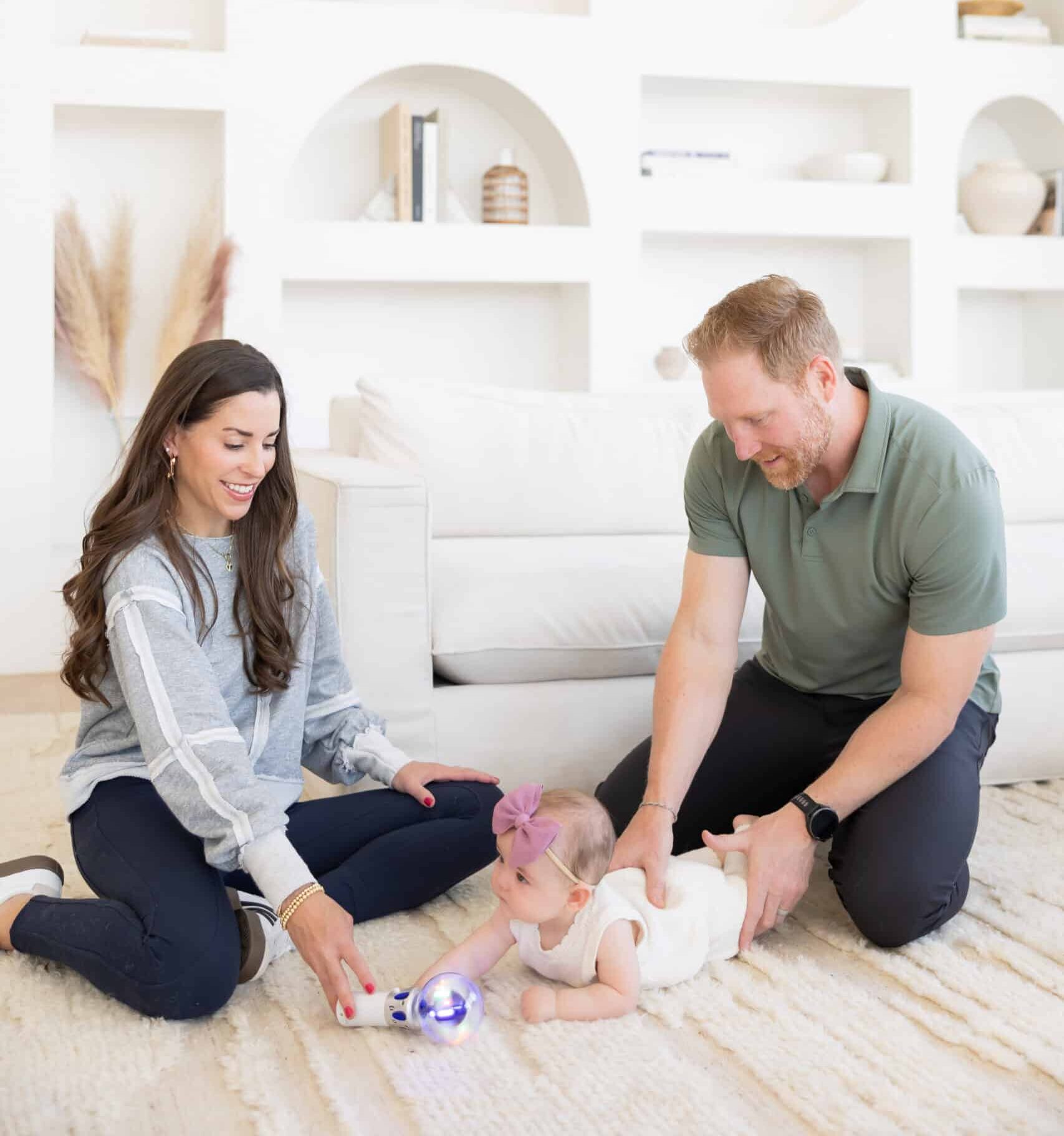

Most parents are handed a milestone checklist and told to watch for the big moments: rolling, sitting, crawling, first steps. Those checklists matter. But they only tell you what your baby should be doing, not what your baby’s body is telling you along the way.
And your baby’s body is always telling you something. Every push-up, arch, kick, and head-turn says something about whether they feel safe, capable, or stuck. As a pediatric chiropractor, the most valuable thing I do is catch those signals early, because what happens between the milestones is where infant motor development is really won or lost.
Babies Don’t Wait. They Compensate.
Here’s what the checklist leaves out. When something is hard for a baby, they don’t stop and wait for help. They find a workaround.
A baby with a tight neck favors one side and always turns the same way. A baby who can’t push up onto straight arms scoots on their bottom instead of crawling. A baby whose core isn’t strong enough props in a wide, slumped sit because it’s the only position that holds them up.
These workarounds look like progress. The baby is still moving, still “doing things.” But they’re building new skills on top of a pattern that wasn’t meant to carry them, and that’s where small things quietly become bigger ones.
How a Missed Cue Becomes a Delay
This is what I call the cascade, and it’s why early reading of body language matters so much.
A side preference at one month, left unread, can become a flat spot on the skull and a tight neck muscle (torticollis) by four months. A baby who never loads their shoulders in tummy time doesn’t build the platform that rolling, sitting, and crawling all stand on. A baby who skips crawling skips a huge amount of shoulder and core work that some kids miss years later as shaky balance or messy handwriting.
None of these starts as a big problem. Each starts as a small signal nobody caught in time. The delay isn’t the first thing that goes wrong. It’s what builds up when the first thing goes unheard.
Why Timing Changes Everything
The encouraging flip side is that babies’ brains and bodies are remarkably adaptable, especially in the first year or two. A pattern caught early is often a few weeks of simple, play-based work. The same pattern caught later can take months, because the baby has practiced it thousands of times and built strength around it. That’s the whole case for reading infant motor development early: not to create worry, but to shrink the window between when a cue appears and when it gets support. I’d always rather a parent reach out early than wait, because the worst outcome of an early check-in is reassurance.
A Few Signals Worth Noticing
You don’t need to memorize a clinical list. Just know the body is talking, and watch for cues like these:
• A strong, lasting preference for turning the head or reaching to one side
• Feeling unusually stiff or unusually floppy, consistently over time
• Getting “stuck” in one position instead of moving in and out of it
• Skipping a stage like pushing up or crawling rather than working through it
• Losing a skill your baby already had
None of these means something is wrong. Each one simply means your baby’s body may be asking for a closer look.

What We Actually Do at KinActive Kids
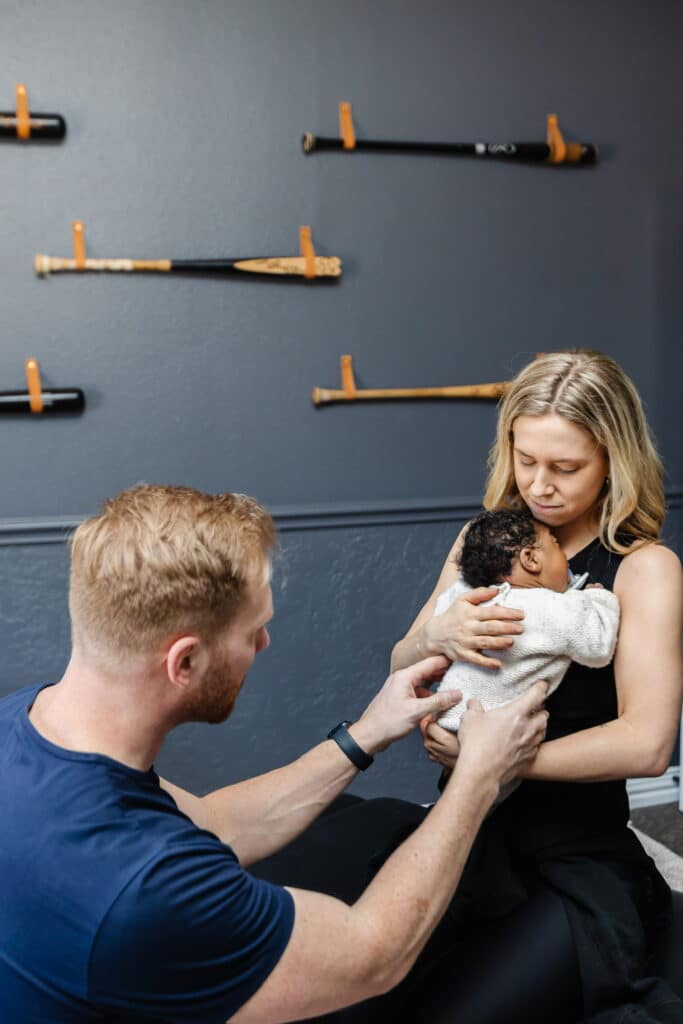
Identifying these signs as fast as possible is the heart of our work. When a family comes in, we don’t just check boxes against a chart. We watch how your baby moves, find the cue underneath the surface, and figure out what pattern it could become if left alone.
Then we build a plan around it. Our pediatric chiropractors and physical therapists work side by side: chiropractic care supports the alignment and nervous system function movement depends on, and physical therapy builds the strength and coordination on top. You leave with simple daily moves for home and a clear picture of what to watch next. That goes for every journey, including children with Down syndrome, cerebral palsy, and other diagnoses.
Trust Your Gut. Early Help Is the Shortest Help.
You know your baby better than anyone. If something feels off, you don’t need to wait for it to get worse to be taken seriously. Reading the body early is how we keep small things small.
If you have a question or want a developmental assessment, reach out to KinActive Kids in Southlake. We’ll help you sort out what’s typical, what’s worth watching, and what to do next.
This article is educational only, not personalized medical advice. Always consult your pediatrician about your child’s health.
Need Additional Support?
At KinActive, we understand that every baby develops at their own pace, but we’re here to support you through every stage of your little one’s journey. If you have concerns about your baby’s motor development or are seeking guidance on gross motor milestones, we can help in a few ways.
- Take a masterclass. Best for parents needing professional guidance from the comfort of their own home.
- Book a Kamp. Best for parents with children experiencing atypical development.
- Book a virtual consultation with our clinic.