Top 5 Reasons Babies Struggle With Rolling (And What You Can Do at Home)
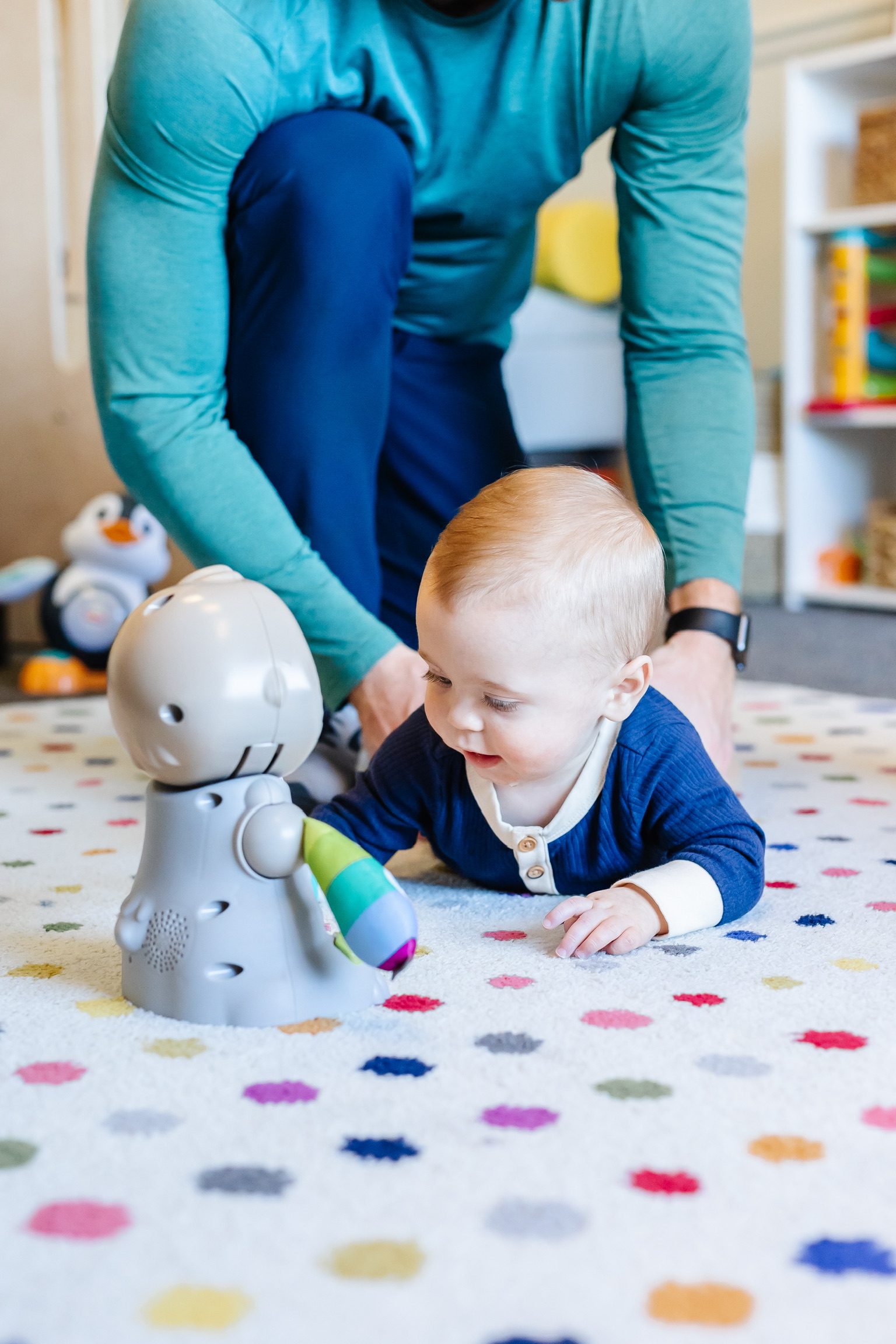
Rolling is often one of the first big “aha” moments in your baby’s gross motor development. Parents commonly search questions like “Why isn’t my baby rolling yet?” or “Should my baby be rolling by now?”, and those concerns are completely valid. It’s the bridge between tummy time and more advanced skills like sitting, crawling, and eventually walking. So when rolling doesn’t seem to click, it’s completely normal for parents to wonder: Is something wrong? Are we behind?
As a pediatric physical therapist who specializes in gross motor development, here’s the reassuring truth: most rolling challenges come down to strength, opportunity, and motor learning, not a major problem. Let’s break down the top 5 reasons babies struggle with rolling and exactly what you can do at home to help.
1. Limited or Ineffective Tummy Time
Tummy time isn’t just about time spent on the belly, it’s about quality. Rolling requires babies to push through their arms, shift weight, rotate their trunk, and control their head. If tummy time is short, inconsistent, or mostly passive, those pieces don’t fully develop.
What this can look like:
- Baby rests heavily on their belly
- Arms stay tucked under the chest
- Minimal reaching or pivoting
- Frustration sets in quickly
What you can do at home:
- Aim for multiple short tummy time sessions throughout the day
- Get eye-level with your baby to encourage head lifting
- Place toys slightly to the side (not directly in front) to promote weight shifting
- Help them push up through straight arms instead of staying propped on elbows
Rolling starts with strong arms and a strong trunk, and tummy time builds both.
2. Difficulty With Weight Shifting
Rolling is not a straight-line movement. It requires your baby to shift their weight to one side to free the opposite side of the body. Many babies get “stuck” because they try to move straight over instead of rotating.
What this can look like:
- Baby lifts legs but doesn’t rotate
- Gets halfway and rolls back
- Uses momentum instead of control
What you can do at home:
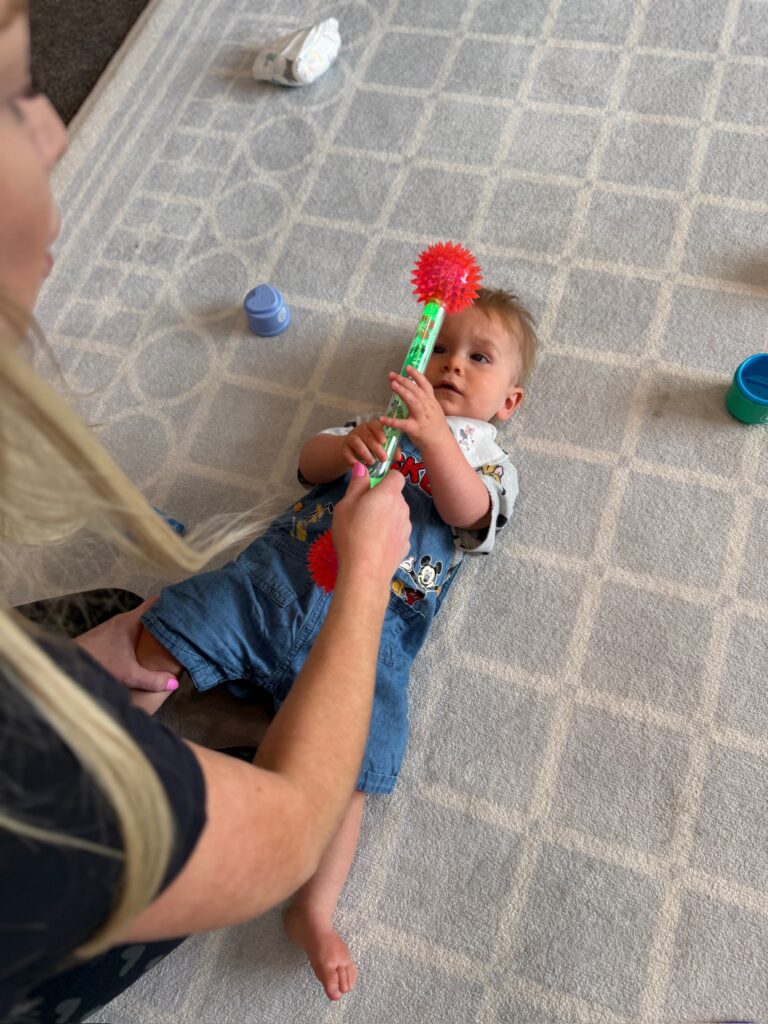
- During floor play, gently guide one hip or shoulder across the body
- Practice side-lying play to help your baby feel this position
- Place toys just out of reach to encourage reaching across midline
Side-lying is an underrated position that teaches babies how rolling actually works.
3. Core and Trunk Weakness
Rolling is a core-driven skill. Even if your baby has good leg movement or head control, limited trunk strength can make rolling feel impossible.
What this can look like:
- Baby arches their back instead of rotating
- Legs lift together but don’t assist with rolling
- Baby relies heavily on head throwing
What you can do at home:
- Encourage hands-to-feet play on the back
- Practice slow, controlled assisted rolling (pause halfway!)
- Use diagonal movements, opposite shoulder to hip, to activate the core
If rolling looks stiff or effortful, core strength is often the missing piece.
4. Too Much Time in Containers
Swings, loungers, bouncers, and seats can be helpful tools, but when they’re overused, babies miss critical opportunities to explore movement on the floor.
Why this matters:
- Floor time builds body awareness
- Babies learn by trial, error, and repetition
- Rolling doesn’t develop in supported positions
What you can do at home:
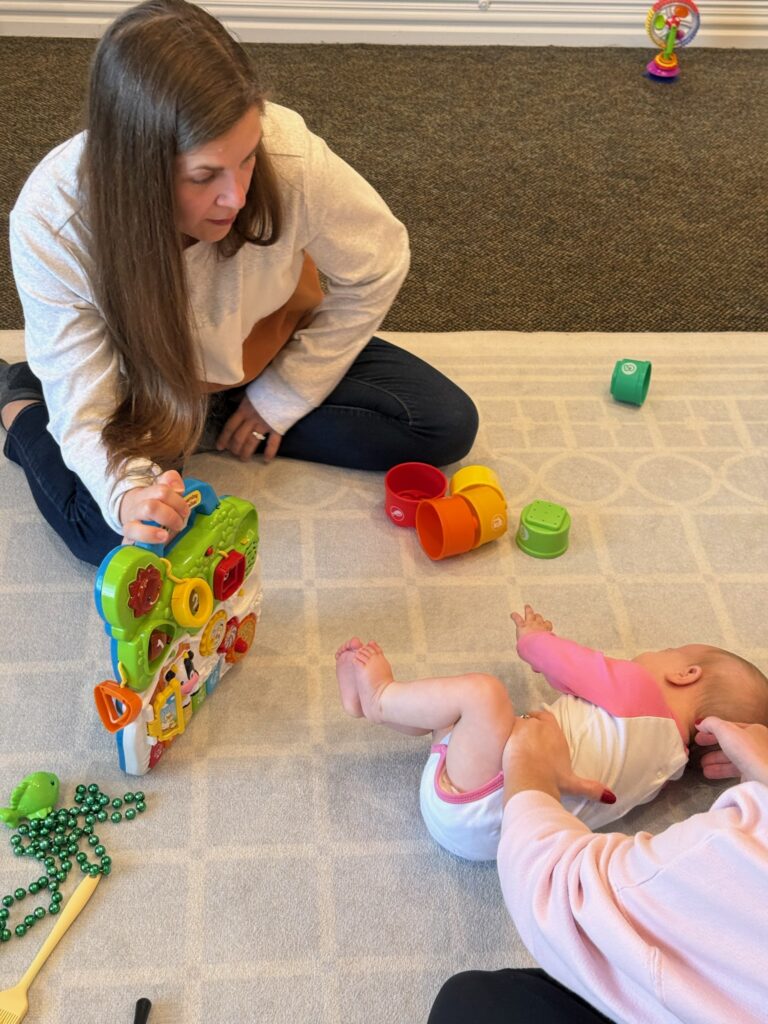
- Prioritize daily floor play on a firm surface
- Rotate between back, tummy, and side-lying positions
- Think of containers as short-term tools, not default positions
Movement skills are learned on the floor, not in devices.
5. They Haven’t Been Taught HOW in a Way That Clicks
Here’s something many parents don’t hear enough: rolling is a learned skill. Some babies need help experiencing the movement before they can initiate it on their own.
What this can look like:
- Baby understands where they want to go but can’t figure out how
- Becomes frustrated during floor play
- Makes attempts without success
What you can do at home:
- Practice assisted rolling slowly and intentionally
- Pause mid-roll to let your baby engage
- Use consistent cues and repetition
Helping your baby roll does not “spoil” them, it teaches their nervous system the movement.
When Should You Be Concerned About Rolling?
Parents often ask “When should I worry if my baby isn’t rolling?” While milestones exist, movement quality and opportunity matter just as much as timing.
Every baby develops at their own pace, but consider reaching out to a pediatric physical therapist if:
- Your baby dislikes all floor play
- There’s a strong preference to one side only
- Rolling feels very stiff or absent over time
- You’re feeling unsure or overwhelmed
Early support can make a huge difference, and often with very simple, play-based strategies.
How KinActive Kids Can Help Your Baby Get to Rolling
At KinActive Kids, we specialize in gross motor development from an orthopedic and movement-based lens. If rolling feels hard, frustrating, or confusing, you don’t have to figure it out alone.
Here are a few ways we support families:
1. Virtual Consultations
Perfect if you want expert eyes on your baby’s movement from home. We assess rolling readiness, identify what’s missing (strength, patterning, opportunity), and give you a clear, realistic plan you can implement right away.
2. Rolling & Gross Motor Masterclasses
Our on-demand masterclasses walk you through:
- Designed for little ones ages 4mo+
- Addresses rolling belly-to-back and back-to-belly
- Step-by-step strategies to build rolling skills safely
These are ideal if you want education, confidence, and tools, without overwhelm.
3. In-Person Therapy Intensives
For babies who need more hands-on support, our therapy intensives provide focused, individualized care to accelerate progress and build strong movement foundations that carry into sitting, crawling, and walking.
Every baby is different. Our goal is to meet your child exactly where they are—and help them move forward with confidence.
The Big Picture
Rolling isn’t just a milestone to check off, it’s a foundation for future gross motor skills like sitting, crawling, and walking. With the right opportunities, guidance, and practice, most babies can and will figure it out.
If you’re unsure whether your baby is on track or want personalized guidance, working with a pediatric PT can help you feel confident and supported, without panic or pressure.
Your baby doesn’t need perfection. They need time, space, and movement.
Need Additional Support?
At KinActive, we understand that every baby develops at their own pace, but we’re here to support you through every stage of your little one’s journey. If you have concerns about your baby’s motor development or are seeking guidance on encouraging more traditional crawling, we can help in a few ways.
- Take a masterclass. Best for parents needing professional guidance from the comfort of their own home.
- Book a Kamp. Best for parents with children experiencing atypical development.
- Book a virtual consultation with our clinic.
We offer comprehensive services designed to support your baby’s physical development, from structured therapy sessions to hands-on advice that you can implement at home. Contact us today to schedule a consultation and help your baby reach their full potential. And don’t forget to follow us on social media for more tips and information on your baby’s development!